Sheiresa Ngo



Couple on the beach | Source: iStock
Relationships are hard. They take a lot of dedication, focus, and work. Finding the right personto settle down with can often feel like a very frustrating game of chance. And even when you do find the right one, you’ll still have your work cut out for you as you make an effort to maintain your relationship.
If you’re looking for a little guidance when it comes to love, you’ve come to the right place. The Cheat Sheet spoke with eight top relationship experts to get some of their best advice. So pull up a chair and read on for more.
1. Take it easy
The best relationship advice I’ve ever gotten, and that I give, is “easy does it.” Too often we get caught up in fear-based needs to control our partner. This pull becomes a destructive compulsion that corrodes the integrity of the relationship. It replaces respect and compassion with anger and resentment. It destroys the quality of our lives and over time, the relationship.This advice impacted the way I approach romantic relationships in that I allowed for a lot more space, which in turn allowed for less reactivity, more peace, happiness, and respect. The classic struggle of all relationships is finding the right calculus in the togetherness-and-autonomy equation. Typically, when a relationship is under stress, one of the partners asks for physical space to break the tension. This is suboptimal. The best way to incorporate space is by being proactive and providing emotional rather than physical space. To do this, partners need to allow each other the space to be themselves and to have their experiences without trying to control the outcome or think that you are responsible for their lives and reaction. It’s hard work and takes practice, but the rewards are well worth the effort.
2. Give 90%
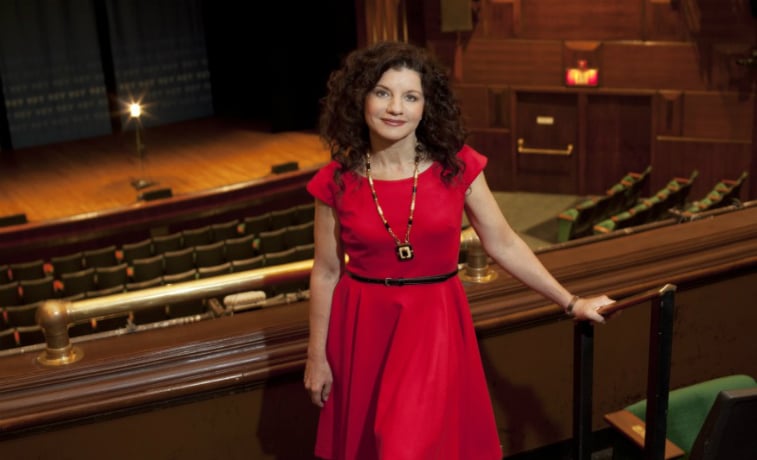
Gail Saltz | Source: Dr. Gail Saltz
My parents advised what they did in their own marriage: “both of you always think about giving 90% to your partner and you both will be very happy.” They meant it’s so important to think about how your partner is feeling, to stand in their shoes, to be giving and compromising, and emotionally generous. That 10% is for the understanding that sometimes it’s also OK to be a bit selfish, to place your needs first, or stand firm on something. They also made clear that this only works if you are both giving 90%.I just celebrated my 26th wedding anniversary. I definitely think about my spouse’s needs and feelings the majority of the time and try to be compromising. In return I feel he is 90% thinking of me and how to consider my feelings and be supportive and loving. Sometimes this means giving something up, but actually most times this means we both get what we want and we both feel very loved, supported, and that we are in each other’s corner. I don’t feel afraid to be giving, because he really has my best interests at heart. We are a terrific team and often we agree on what we want. And when we don’t, we tend to take turns supporting the other’s wants.
3. You are responsible for your own happiness

Couple lying on the sand | Source: Thinkstock
It’s not my partner’s job to make me happy. It’s my job to make me happy. Of course it’s easy to feel good when my partner is acting in a way that I want —but needing them to be a certain way in order for me to feel good —that’s bondage. Thinking that they’re always going to be in a good mood and directing their affectionate attention towards me — while that may be possible during the initial stage of a relationship, is impossible to sustain long-term. I’m responsible for my happiness. My partner is responsible for her happiness. We deliberately focus on things to feel good in our lives and for things to appreciate in one another.If you’re looking for someone to complete you —or vice versa—you’re looking in the wrong direction for the lasting happiness, wholeness, and fulfillment that you truly seek. Wouldn’t it be better if you could find a way to feel how you want to feel regardless of what you’re partner is saying or doing?This advice transformed every relationship in my life – not just the romantic ones. Before I knew these things, I was unintentionally holding my partner responsible for my happiness. When I learned that I’m responsible for my own happiness and when I learned how to consistently align with it, my entire world transformed. I now have the freedom to choose if and when I spend time with someone else, and I deliberately choose to spend time with others who get this, too. My relationships are more meaningful, more loving, more free, and most importantly – more fun! And my overall happiness continues to grow, too, regardless of whether I’m in a relationship or not.
4. Stop waiting and live your life

Lisa Steadman | Source: Lisa Steadman
When I was single and stressed about finding love, my good friend, Scott, a confirmed bachelor, told me this. He said, “Lisa, you need to calm down, chill out, and stop expecting love to be here already. Your sense of entitlement is killing your ability to attract a good man.” When I realized he was right, I stopped waking up every day feeling angry that love hadn’t found me yet. I stopped being resentful that my friends were married and having lives that felt out of reach to me. I stopped feeling like my life was on hold. As cliché as it sounds, I stopped waiting and started living. Overnight, my outlook changed. My results changed, too. I started meeting men wherever I went. I went on dates, had fun, didn’t give my heart away foolishly, and met my husband. I knew he was The One when he told me, “I’ve always been too nice for the naughty girls and too naughty for the nice ones.” That had been my experience with men.My advice for singles who are struggling in their search is to look within and ask themselves what part of their own life still needs work. When you clean up your side of the street, you make room for a perfectly imperfect person to see you, celebrate you, and love you. And remember that Mr. Right [or Ms. Right] will not be perfect, but will be perfect for you, just as you’ll be perfectly imperfect for him [or her].
5. Love yourself

Couple in bed | Source: iStock
You can’t love anyone more than your willingness to love yourself. Through this advice I learned about the importance of caring for my mind, body, and spirit. I liken love to the oxygen mask on a plane. You have to apply it to yourself before applying it to the person next to you. This advice improved my chances of winning my wife’s hand in marriage. She was searching for true love. She wanted someone to spend the rest of her life with. Conveying to her that I loved myself signaled that I could be a pillar of strength and compassion.
6. Don’t put boundaries on others

Smiling couple | Source: Thinkstock
You can’t put boundaries on someone else—only yourself. If someone is treating you badly, you can’t change their behavior. But you can ask yourself why you accept it and how you can put a boundary on yourself so that you won’t accept it again. It made me take more responsibility for my role in bad relationships. Instead of feeling like a victim of circumstance, I was empowered to reject bad treatment and choose a different person. Also, [remember that] life is a self-fulfilling prophesy. If you believe you are undeserving of happiness, love and prosperity, that’s what the universe will give you.
7. Sometimes love is where you’d least expect it

Hunt Ethridge | : Martha Swann
The hottest, most fun, sexiest, interesting, growth-stimulating, spontaneous, most romantic, most eye-opening relationships or experiences all were not with people that I thought I would end up with. Just because a relationship has a shelf life doesn’t mean you shouldn’t enter into it. This advice allowed me to enjoy each interaction for what it was and not try to make it something it wasn’t. And at the end of the day, our life is just a conglomeration of memories and I have many happy memories to think on. This gives me the freedom to experience all life has to offer!Other good advice: “Always be unexpected.” This doesn’t have to be in grand gestures, but predictability in a relationship = boring = death of romance. Worst Advice? “Don’t worry, it’ll happen.” If I wanted to learn French, if someone told me “Don’t worry, it’ll happen,” how stupid does that sound?! Dating is a skill set like every other and you get out of it what you put into it.
8. Put in some effort

Happy couple | Source: Thinkstock
First, you simply must put time and energy into dating. A combination of online dating and socializing (perhaps including speed dating or singles mixers) is ideal. And second, you must go about dating the right way—from a positive attitude and an effective online dating profile to behavior on dates and communication with potential partners. If your approach to finding love is waiting for it to just come along, you’re taking a huge risk and will probably be single for a long time.